
Let's talk about what actually changes
Honestly? Your body isn't broken. But your timeline is different now. Between your mid-30s and your 50s, the speed at which you go from zero to aroused shifts measurably. What used to take 5 minutes now takes 15. Sometimes 25. That's not dysfunction. That's biology. And the good news is that you have more control over it than you think.
Here's what's happening physiologically. Estrogen supports blood flow to the clitoris and vaginal tissue. As estrogen fluctuates (perimenopause) or drops (menopause), that pathway gets narrower. Your nervous system also becomes less responsive to subtle touch. You need more signal to get the same response. That's not a problem if you understand it. It becomes a problem only when you're waiting passively for something that used to arrive on its own.
Why waiting doesn't work anymore
In your 20s and 30s, you could often orgasm through foreplay alone because your tissue was primed and your nervous system was hypersensitive. Now, that same foreplay might feel pleasant but distant. If you're waiting for the old sensation to kick in, you'll usually just give up. Most of my clients describe it as feeling like the moment is slipping away before anything actually builds.
The solution isn't longer foreplay. It's amplified sensation. That's where lemon vibrators and other clitoral vibrators become strategic. They're not a workaround for a broken system. They're the tool that matches your current nervous system's needs.
Think of it this way: younger bodies have higher baseline sensitivity. A gentle hand works because the signal is already strong. After 40, you're starting from a quieter baseline. A vibrator isn't forcing an artificial orgasm. It's simply raising the signal above the noise so your body can respond the way it's designed to.
How the Lem and similar clitoral vibrators help specifically
Most traditional vibrators use steady vibration. The Lem works differently. It uses gentle suction paired with waves of pressure, which mimics the stimulation pattern that tends to work best for clitoral tissue that's become less immediately responsive. Here's why that matters for your particular timing issue.
When arousal takes longer to build, you need a tool that can:
- Deliver consistent, intense-enough stimulation without requiring you to do any mental heavy lifting. Your brain doesn't have to keep pushing for sensation that won't come.
- Work quickly enough that you don't lose the connection with your partner or your own desire before you reach the threshold where your body takes over.
- Feel different enough from your own hand that it creates novelty, which boosts dopamine and actually accelerates arousal.
The suction mechanism in lemon clitoral vibrators does all three. It's strong enough to bypass the desensitization. It creates a novel sensation. And because it's working on a specific mechanism (suction, not vibration alone), it tends to produce results within 5-10 minutes for most people, even if manual stimulation would take 30.
The partner element matters more than you think
Here's where relationship dynamics get real. If you're with a partner, your slower arousal timeline can create friction. They're ready. You're... warming up. So they do more of the things they think should work. You try harder. Nothing clicks. Then both of you feel rejected, even though what actually happened is just a timing mismatch.
Introducing a lemon vibrator early in the process flips this dynamic. It's not a replacement for partner intimacy. It's a bridge. You use it for 8-10 minutes while your partner is present but not doing the work of trying to arouse you single-handedly. You get stimulated. They get to watch and participate without having to carry the whole arousal load. By the time you're genuinely aroused, they're already engaged and you're on equal footing.
Many couples find this actually deepens connection because it removes the performance anxiety from both sides.
What slower arousal actually means for pleasure
There's a myth that slower arousal means weaker orgasms. Not true. In my practice, I see exactly the opposite pattern. When you accept that arousal takes longer and use the right tools, your orgasms tend to be more intense and more focused. Why? Because slower arousal usually means deeper arousal.
Younger bodies sometimes have quick, surface-level orgasms. Older bodies, once they get going, tend to have more complex, layered responses. The pathway just takes longer to activate. Once it does, you're working with a more mature nervous system that's capable of sustained pleasure. That's not a downgrade. That's an upgrade with a slower startup.
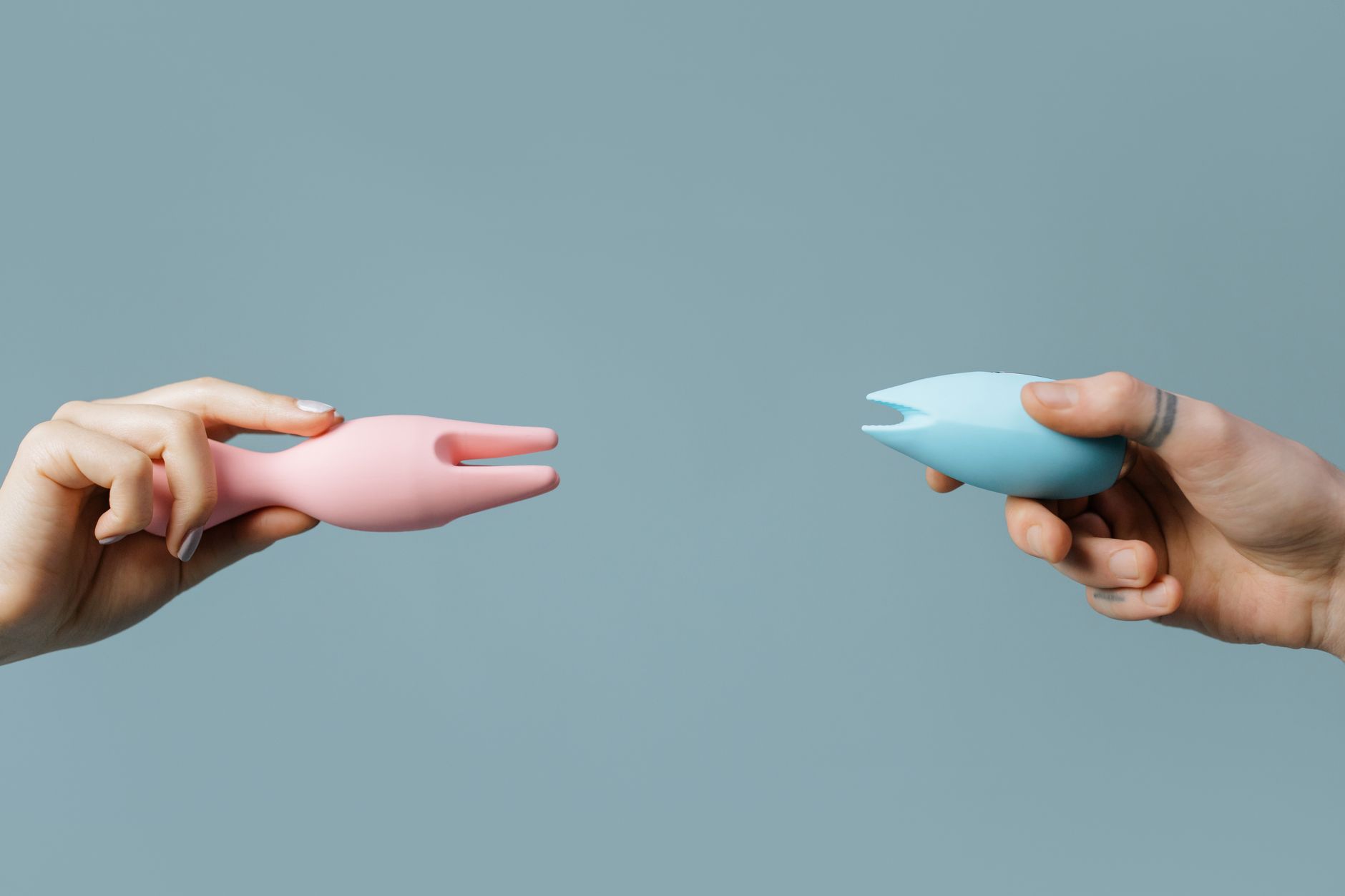
Photo by cottonbro studio on Pexels
Practical timing strategies
If you're using a lemon clitoral vibrator and you want to sync arousal with a partner, here's what actually works:
Start the vibrator 10-15 minutes into intimate time, not at the very beginning. You want to have already kissed, touched, connected verbally. The vibrator accelerates what's already begun. It doesn't generate arousal from nothing.
Don't aim to orgasm immediately. Use the first 5-8 minutes to get yourself to "definitely aroused" rather than "peak arousal." Then pause the vibrator, reconnect with your partner, and let them take over if that feels right. You'll find that once the nervous system has crossed that initial threshold, manual stimulation or penetration works much better than it would have without the vibrator helping you over the hump first.
If you're solo, the timeline is different. You can use the vibrator for the full buildup to orgasm. But many people find they prefer the hybrid approach even when alone: vibrator to get primed, then switch to another method or just continue with the vibrator depending on what feels good in the moment.
Why this isn't the same as the advice your mother got
The old framework for slower arousal was basically to wait longer and hope. That led a lot of women to believe they'd lost something. Modern relationship science and sexual medicine say something different: you haven't lost anything. Your system is just asking for a different input to produce the same output.
That input doesn't have to come from a partner's hands or body. It can come from a tool designed for it. That's not a compromise. It's pragmatism. And honestly? Most of my clients find it's more reliable than waiting for a partner to figure out the new rhythm by trial and error.
When to expect results
If you're in your 40s or early 50s and arousal has started to feel sticky, you should see a noticeable shift within the first 2-3 uses of a lemon vibrator. That shift looks like: getting to genuine arousal 5-10 minutes faster than you would without it, and feeling more confident that arousal will happen at all.
If nothing changes after a week of consistent use, that's worth mentioning to your doctor or a sex-positive therapist, because slower arousal is normal, but zero arousal or pain can signal something else that deserves professional attention.
For most people, though, the change is immediate and almost surprising. You realize you'd gotten used to arousal being uncertain. Once you have a tool that works reliably, the whole experience shifts from stressful to just... different.
The bigger picture
Slower arousal after 40 is not a sign of lower capacity for pleasure. It's a sign that your body has matured and its needs have shifted. The right clitoral vibrator isn't a Band-Aid on a broken system. It's the recognition that your nervous system works differently now and deserves a tool that matches it.
When you accept that change and work with it instead of against it, something shifts. You stop seeing your sexuality as something you're losing and start seeing it as something you're refining. And that's where the real pleasure lives.
Frequently asked questions
Why does arousal take longer after 40?
Both hormonal changes and nervous system shifts contribute. Estrogen fluctuation or decline reduces blood flow to the clitoris. Your nervous system also becomes less hypersensitive to subtle touch, meaning you need a stronger signal to trigger arousal. This isn't failure. It's a normal physiological transition. Hormonal shifts and how lemon vibrators work with them is something many people navigate successfully.
Can lemon vibrators actually speed up arousal or do they just feel better?
They do both, but the speed component is measurable. By providing intense, consistent stimulation above your current baseline sensitivity threshold, lemon suction vibrators activate your arousal pathway faster than you'd typically reach it through touch alone. You're not creating artificial arousal. You're giving your nervous system the signal strength it now needs to wake up.
Is using a vibrator to get aroused "cheating" if I'm with a partner?
No. It's partnership. Many couples use lemon clitoral vibrators as part of foreplay specifically to solve the timing mismatch that comes with aging. It's not replacing your partner. It's solving a practical problem so you can both be present and engaged. If anything, it reduces performance pressure on both of you.
Will using a vibrator make my body dependent on it?
Your body isn't dependent on anything. Your nervous system has changed, and it now responds better to a certain kind of input. That's not dependency. That's having the right tool for the job. You can still orgasm without a vibrator. But if arousal takes 30 minutes without one and 10 minutes with one, why wouldn't you use it? Understanding how clitoral sensitivity works as you age can help you feel confident about your choices.
What if my partner finds it threatening or feels like I'm rejecting them?
This is worth a conversation, not a reason to hide your needs. Most partner anxiety comes from misunderstanding. Frame it clearly: "This isn't about you. This is about my body needing something different now. Want to be part of it?" Most partners actually prefer knowing what works over guessing. If they continue to push back, that's a relationship issue worth exploring, ideally with a therapist.
Is there a "best" lemon vibrator for slower arousal?
The Lem is designed specifically for clitoral stimulation and uses suction rather than vibration alone, which tends to work well for people whose arousal takes longer to build. But the best tool is whatever produces results for your particular body. Start with what you can try, notice what actually works, and build from there.
If you're navigating changes in desire, arousal, or sexual connection with age or with a partner, these shifts are real and they're workable. Your pleasure matters, and it's worth taking the time to understand what your body needs now. If you'd like to talk through what might work for your specific situation, I'd love to help. Get in touch.