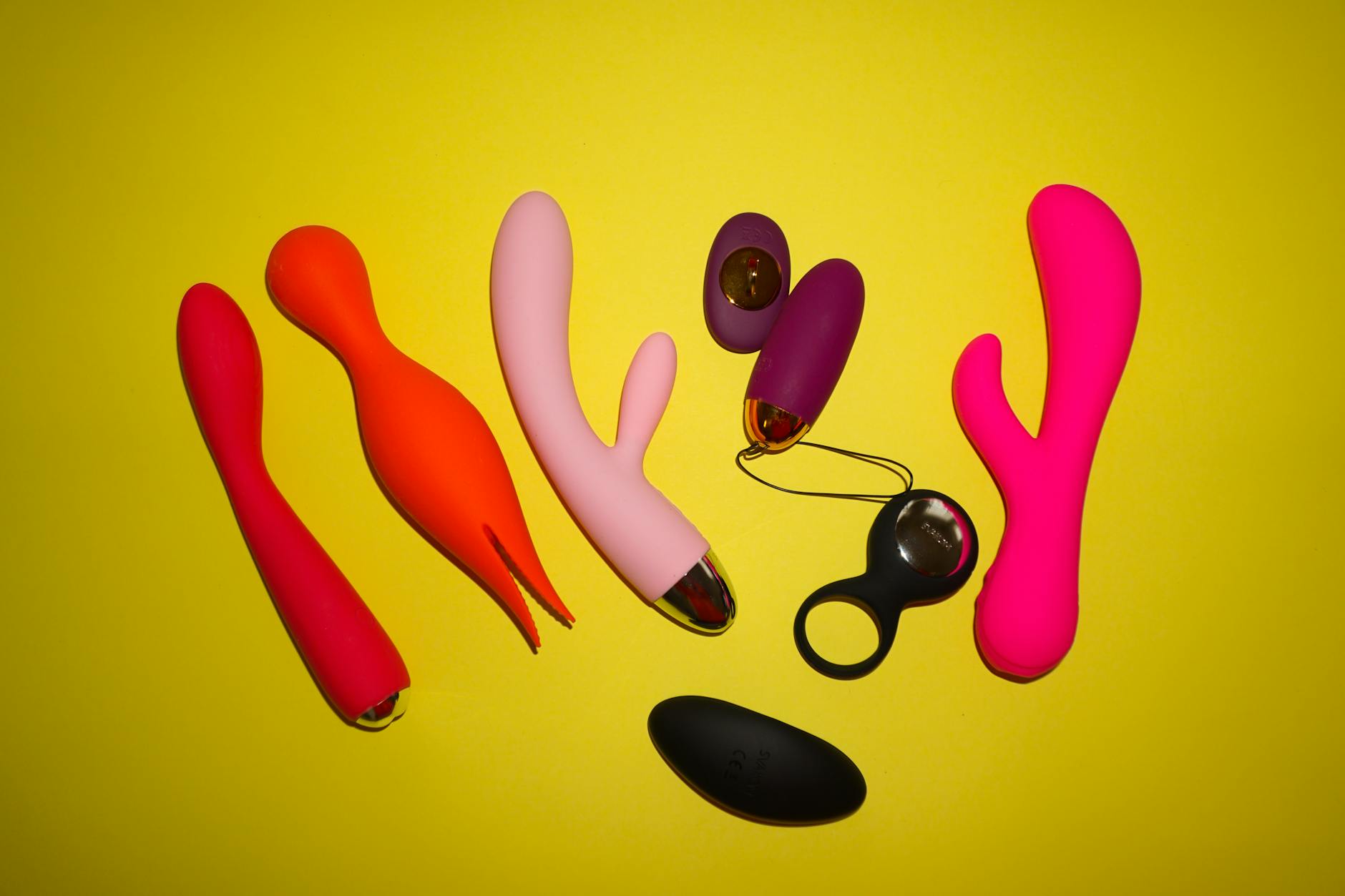
Let's talk about what nobody mentions
Your clitoris changes over time. Not in a way that ruins things, but in a real, measurable way that most people discover by accident and then feel weirdly embarrassed about. The vibration setting that worked beautifully at 28 might feel like too much at 40. Or the reverse. Or it shifts every few years in ways that feel random until you realize there's actually a pattern.
Here's what's actually happening, and how to use lemon vibrators smarter as your sensitivity evolves.
Why sensitivity shifts as you age
Three things are moving simultaneously:
Nerve fiber changes. The clitoris has roughly 8,000 nerve endings packed into an incredibly small space. Over time, those nerves don't necessarily die off, but they do reorganize. The distribution of different types of nerve fibers—the ones that detect light touch, pressure, vibration, temperature—shifts slightly with age. Some people notice that direct vibration becomes less pleasant and broad suction feels better. Others find the opposite.
Hormonal context. Even if you're not in menopause, baseline estrogen levels gradually decline across your 30s and 40s. This doesn't mean sensation goes away, but it does affect tissue thickness and how quickly blood floods into the area during arousal. Thicker tissue can sometimes make vibration feel less sharp, which some people find relief in and others find frustrating.
Familiarity and novelty. This one's psychological but completely real. If you've been using the same vibrator at the same settings for a decade, your nervous system adapts. You're not "numb"—you're habituated. Switching tools, patterns, or intensity resets that adaptation instantly. Many clients find that going back to a vibrator they used years ago feels shocking in its intensity now, even though nothing changed about the device itself.
The sensitivity spectrum as you age
There's no linear trajectory. Some people report heightened sensitivity in their 40s and 50s. Others describe a narrower sweet spot—less range of what feels good, more precision required.
Think of it like this: at 25, maybe patterns 1 through 7 on your lemon vibrator all feel pleasant. At 40, it might be patterns 3, 4, and 5 that hit right, and anything outside that band feels off. That's not worse. It's just different. And honestly, it often means less time wasted on settings that don't work and faster access to what actually does.
Photo by FounderTips on Pexels
How to recalibrate when sensation shifts
Start from the bottom. The first time you use your lemon vibrator after noticing sensitivity has changed, begin at pattern 1. Not because you're fragile, but because you're gathering data. Move through the patterns slowly. Note where things start feeling good and where they stop. You're mapping a new landscape that used to be familiar territory.
Test frequency and pattern, not just intensity. Lemon vibrators, especially the clitoral vibrator models, offer different pulse patterns alongside speed settings. As sensitivity evolves, some people find that a particular pulse pattern suddenly works better than steady vibration. Or vice versa. If intensity alone isn't clicking, experiment with pattern. One of the patterns on a lemon sucker might activate sensation differently than another, even at the same speed.
Pay attention to arousal lag. If you're noticing that sensation feels muted, the gap between "not aroused" and "aroused enough to feel vibration fully" might have widened. This isn't a problem to fix. It's information. Budget extra time for warm-up. Touch yourself or have a partner touch you before you bring in the vibrator. Sensitivity that felt instant at 30 might need 10-15 minutes of blood flow and mental engagement at 45. That's normal physiology, not decline.
Direct angle matters more now. Your clitoris didn't move, but the angle of approach sometimes becomes more critical as you age. If you've always used your lemon vibrator straight-on, try coming at it from slightly above or to the side. Small adjustments in positioning can unlock sensation that direct contact misses. This is especially true if tissue tone or pelvic floor tension has changed.
When sensitivity becomes too high
Some people enter their 40s or 50s and suddenly find that touch feels almost overwhelming. Direct vibration can feel painful or jarring rather than pleasurable. This is also normal and also fixable.
The solution isn't to push through. It's to add a buffer. Damp cotton, a thin silk layer, or even using the vibrator through clothing dampens intensity without killing sensation. You're modulating the signal, not erasing it. Many people find this approach opens up pleasure that felt closed off. It's worth trying before assuming sensitivity has become a problem rather than a parameter change.
If numbness or loss of sensation appears suddenly—not gradual shift but actual disappearance—that's worth mentioning to a healthcare provider. Sudden neurological change can signal something worth investigating, though it's usually nothing serious.
How partners can help during this transition
If you're exploring pleasure with a partner, this is information worth sharing. "I'm noticing that intensity feels different than it used to" is a practical observation, not criticism of them or the relationship. A good partner responds with curiosity, not defensiveness. You're not saying sex was better before. You're saying your body's asking for a different approach now.
Many couples find that this adjustment period actually deepens communication. You end up talking more specifically about what works, which sounds boring but actually makes things better for everyone. Vagueness is the enemy of good sex. Specificity is the friend.
The role of psychological load
Here's something medical literature doesn't always capture: sensitivity often tracks with mental state. If you're in a period of high stress, grief, or major life transition, sensation can feel distant or muted even though nothing physiological changed. Conversely, periods of low stress, increased self-focus, and emotional safety often come with sharper sensation.
This means that sometimes what feels like aging is actually burnout masquerading as insensitivity. If sensation feels flat across the board, check in with your nervous system first. Are you sleeping? Are you stressed? Is your relationship solid? Sometimes the fix isn't a stronger vibrator. It's taking a week off, sleeping nine hours, or having an actual conversation with your partner.
That's not a substitute for lemon vibrators or any other tool. But it's context that matters.
Building flexibility into your routine
Instead of relying on one setting or one approach, treat your pleasure practice like you'd treat fitness. Rotate tools. Vary patterns. Change timing. Some weeks you might want the sustained intensity of pattern 5 on your clitoral vibrator. Other weeks pattern 2 with the Lemon suction feature might feel revelatory.
This isn't about constant novelty-seeking. It's about preventing habituation and staying responsive to what your body's actually asking for. Your needs at 35 are different from your needs at 50. Your needs next month are probably different from your needs this month. Building flexibility into your practice means you're not fighting your body's changes. You're dancing with them.
What actually matters as you age
Sensitivity shifts. Sometimes up, sometimes down, usually sideways in unexpected ways. That's not a deadline. It's just data. The people who stay most satisfied with their pleasure as they age aren't the ones with the most sensitive bodies. They're the ones willing to pay attention, adjust, and try something different when what worked before stops working.
You've already learned your body's language once. You can learn it again. And honestly? Most people find that the version of themselves at 40 or 50 is much smarter about what they want than they were at 25. Your clitoris might have shifted, but your understanding of it probably got sharper. That's the trade most people would take.
People also ask
Does sensitivity to vibration decrease with age?
Not universally. Some people report heightened sensitivity over time, especially after hormonal shifts settle. Others notice a narrowing—fewer patterns feel good, but the ones that work hit harder. The key is that what decreases isn't nerve function itself. It's the range of what feels pleasant, and sometimes the speed of responsiveness. Most people adapt easily once they understand what's shifted.
Can you rebuild clitoral sensitivity after it feels numb?
Yes, usually. Numbness often comes from desensitization (your nerves adapting to repeated stimulation) rather than damage. Taking a break from your usual vibrator for a week or two, switching to a different pattern or tool, or adding a buffer layer between you and the vibration can reset sensation. If numbness appears suddenly or doesn't improve within a few weeks, that's worth checking with a healthcare provider, but gradual habituation is totally reversible.
Is it normal for your favorite vibrator to stop working for you?
Completely. What worked at 30 might feel too intense, too broad, or just wrong at 45. This isn't a reflection on the vibrator or on you. It's just aging. The solution isn't always a new tool. Sometimes it's a new pattern, a buffer, or a different angle of approach. Sometimes it's taking a break and coming back to that tool after three months. Your relationship with pleasure evolves like any other relationship.
What if vibration feels painful instead of pleasurable?
Start by confirming there's no infection or skin irritation, which can make touch feel sore. If you're clear of that, try reducing intensity by at least half, or add a barrier. Some people find that what feels overwhelming at direct contact becomes wonderful through a thin layer of fabric. You're not losing sensitivity. You're discovering that your sensitivity has a different sweet spot now. Adjust and see what opens up.
Does hormonal birth control affect clitoral sensitivity differently as you age?
Yes. The impact often becomes more pronounced in your 40s. Some people on long-term hormonal birth control report that sensitivity gradually dulls, and it can feel more noticeable during this decade because you're comparing it to a baseline from years ago. If you stop hormonal birth control, sensation often returns or shifts. Worth experimenting with if pleasure has felt consistently muted.
Can stress or relationship issues make clitoral sensation feel different?
Absolutely. Stress, grief, and emotional distance all mute sensation. So does depression, which is why people recovering from depression often report that pleasure returns feeling almost shockingly intense. Sensitivity isn't just physiology. It's also psychology. If sensation feels flat across the board, check in with your emotional state and your relationship first. Sometimes the vibrator isn't the problem.
The takeaway
Your body's sensitivity to touch evolves across your lifetime. Sometimes it gets sharper, sometimes softer, usually more specific. The lemon vibrators and clitoral vibrators that serve you now won't necessarily serve you the same way in five years. And that's fine. It's information, not failure. The people who enjoy pleasure most aren't the ones with the most sensitive bodies or the fanciest toys. They're the ones paying attention, staying curious, and willing to adjust when something shifts. That's something that actually improves with age.
If you want to talk through your specific situation—whether it's sensitivity changes, partner communication around pleasure, or anything in between—reach out to us at /contact. We're here to help.