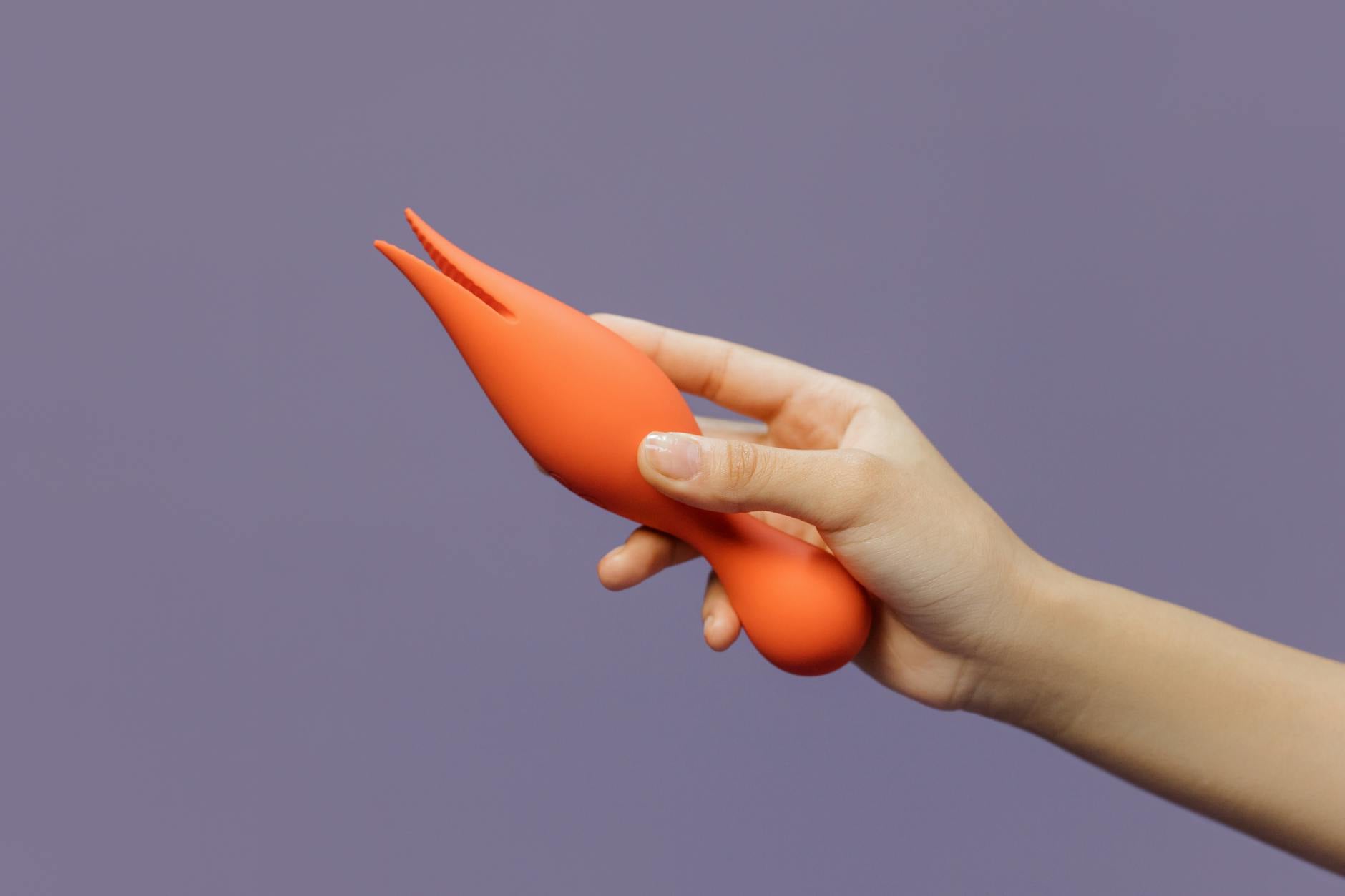
How to Use Lemon Vibrators When Partners Have Mismatched Desire Timelines
Let's be real. Desire mismatch is one of the most common relationship tensions that nobody talks about until it's already festering.
One of you feels rejected. The other feels pressured. Both of you feel alone. And then the conversation happens at 11 p.m. on a Tuesday, and it goes nowhere because you're both defending your position instead of solving the actual problem.
Here's what I've learned working with couples: mismatched desire timelines aren't a libido problem. They're a coordination problem. And lemon clitoral vibrators can help you solve it—but only if you understand what they actually do in this scenario.
The real cost of desire mismatch
When partners have different appetites for sex, what actually breaks down is touch. The higher-desire partner becomes afraid to initiate because rejection hurts. The lower-desire partner braces for pressure every time intimacy starts. Neither of you touches the other casually anymore—no hand on the back, no kiss that doesn't feel loaded with expectation.
After a few months, you're not just having less sex. You're having less connection period.
The lower-desire partner often feels guilty ("What's wrong with me?") or defensive ("Why do you always want it?"). The higher-desire partner feels trapped between their own needs and their partner's comfort. Both versions is exhausting. Both versions leads to the same place: resentment that sounds like logistics.
What lemon clitoral vibrators actually solve here
A lemon vibrator like the Lem isn't a substitute for partnered sex. It's a release valve. It lets the higher-desire partner access pleasure on their own timeline without waiting, resenting, or pressuring. That matters more than it sounds.
When you stop forcing the partnership to meet 100 percent of your needs, the sex you do have together stops feeling like an obligation for the lower-desire partner. It becomes something you both choose. And chosen sex is exponentially better than duty sex.
For the lower-desire partner, the pressure lifts. Your body gets to want what it wants without guilt. And weirdly, when the pressure lifts, desire often shows up more frequently on its own. Not always. But often enough that it's worth trying.
How to actually have this conversation
First, don't frame it as "I'm going to use a vibrator because you won't have sex with me enough." That's the fastest way to make your partner feel replaced and rejected.
Instead: "I want us to both feel good. I have needs on a different timeline than you do, and that's okay. I've been thinking about how we can both win here without putting pressure on you."
Then mention the vibrator as one part of a bigger plan. Not the whole plan. One option among several.
What the bigger plan might look like:
First, agree on a minimum frequency that feels sustainable for the lower-desire partner. Not aspirational. Sustainable. If that's once a month, start there. If it's once a week, start there. The number doesn't matter. The agreement does.
Second, agree that outside that schedule, the higher-desire partner gets space to self-pleasure without explanation or negotiation. A lemon vibrator makes that easier because it's effective and fast. You're not spending an hour building up only to feel disappointed.
Third, schedule non-sexual touch. Hand-holding, kissing, massage, whatever. Something that isn't leading to sex but isn't excluded from intimacy either. This is where you rebuild the casual connection that desire mismatch destroys.
Why lemon vibrators specifically help with this dynamic
Lemon clitoral vibrators work through suction and pattern variation, not just vibration. That means they're effective solo and they get results faster than traditional vibrators. For the higher-desire partner, that matters. You're not waiting for your body to cooperate. You're getting to pleasure without resentment.
They're also discreet. You can keep it in a regular drawer, use it quickly, move on. There's no performance aspect. No staging. No building a whole scenario. Just access to your own pleasure on your own terms.
For partners who feel guilty about their own needs, that simplicity is freedom.
What happens when the lower-desire partner wants to be involved
Sometimes, using a lemon vibrator together becomes its own kind of intimacy. The lower-desire partner watching or participating without pressure can feel entirely different than partnered sex. There's no expectation that it leads anywhere. It's just mutual pleasure.
If your partner is interested, you could use the vibrator together as foreplay sometimes. Or they could use it on you. Or you could each use your own. The point is that you're both on the same team now, not playing separate games.
This takes the shame out of the dynamic for both of you. It's not "you're not enough" anymore. It's "we both deserve pleasure."
Timing matters more than you think
When you use a lemon vibrator matters. If the higher-desire partner only touches themselves when the lower-desire partner is unavailable or asleep, it stays hidden. It stays shameful. It stays separate.
Try using it when your partner is in the house. Not always during sex. Sometimes just in the evening, in another room, openly. Make it normal. Make it part of your household rhythm instead of something that happens in the dark.
This sounds small, but it changes everything. It signals that pleasure is healthy and expected, not something you have to hide.
The thing nobody tells you about desire mismatch
Frequency often changes once you stop fighting about it. The lower-desire partner sometimes wants it more when there's no pressure. The higher-desire partner sometimes wants it less when there's no waiting and resentment. You might find an actual middle ground that neither of you expected.
But that only happens if you genuinely stop making the mismatch a problem to solve and start treating it as a logistical fact to work around.
When to get help
If the desire mismatch is paired with something else—like unresolved conflict, infidelity, or one partner feeling completely disconnected—a vibrator won't fix that. You need a couples therapist, and you should get one.
But if the mismatch is the issue, not a symptom, then lemon clitoral vibrators combined with honest conversation can genuinely improve things. Not by making you want the same frequency. By making frequency stop being a referendum on how much you love each other.
You don't have to want sex at the same intervals to want each other. That's the whole point.
FAQ: Mismatched desire and solo pleasure
Can using a vibrator solo actually reduce resentment in a relationship?
Yes, but only if both partners view it that way. If the higher-desire partner uses a vibrator secretly and the lower-desire partner finds out, it can feel like betrayal. But if you talk about it first and agree on it, it shifts from "you're replacing me" to "we're both taking care of ourselves." The resentment goes down because the pressure goes down. Pressure is what kills desire, not frequency.
What if my partner is jealous or threatened by a vibrator?
That's worth exploring in conversation. Ask why. Is it fear that the vibrator will be "better"? Is it shame that they don't want to be watched? Is it feeling like they're "not enough"? Those are different conversations and different fixes. Sometimes couples therapy helps here. Sometimes it just takes time and repeated reassurance that solo pleasure doesn't replace partnership. What helps most is showing, not telling. Use it openly, keep partnered sex good, and let your partner see that the two things coexist.
Should we set a schedule for solo pleasure like we do for partnered sex?
No. The whole point is that solo pleasure is yours to control. A schedule makes it feel like another obligation. But you could agree on general boundaries, like "I'll use a vibrator Tuesday and Thursday evenings when you're working late." Just keep it loose enough that it stays actually pleasurable.
Does using a lemon vibrator solo mean you don't want your partner anymore?
Absolutely not. It means you don't want to wait for partnered sex to meet all your needs. Two people can want each other and still have different sexual appetites. Vibrators help you separate those two facts so neither one ruins the relationship.
What if desire mismatch is really about my partner not being attracted to me?
That's different. A vibrator won't help there. You'd need to address attraction directly, maybe with a therapist. But mismatched desire due to schedule, stress, or different baseline drives is super common and has nothing to do with attraction. Make sure you're actually dealing with the first thing before assuming it's the second.
Can both partners using vibrators together improve our sex life?
Sometimes. If you're both interested in pleasure without pressure, playing together—whether that's using vibrators, touching each other with them, or just being in the same room—can be a low-stakes way to rebuild connection. But again, this only works if both people want it. Never push it.
The bottom line
Desire mismatch doesn't mean you're incompatible. It means you're human. Humans want different things at different frequencies. When you use lemon vibrators to honor that difference instead of fighting it, the whole dynamic changes.
You're not solving a problem anymore. You're solving a logistical puzzle. And logistical puzzles have actual solutions.
Start with the conversation. Everything else follows from there.