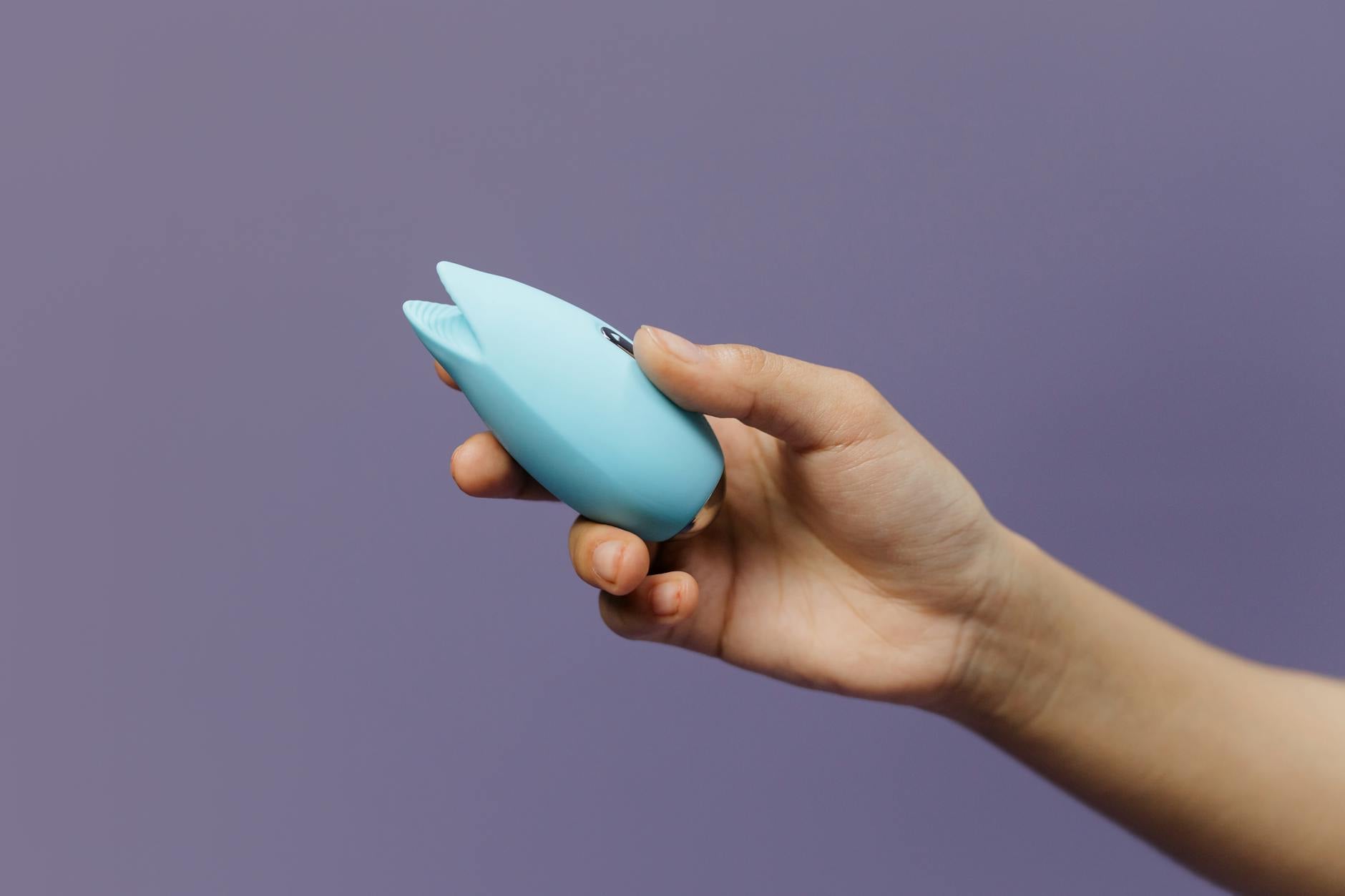
How to Use Lemon Vibrators When Partners Have Mismatched Sex Drives
Let's be real. One of you wants sex twice a week. The other wants it twice a month. Nobody's broken, and nobody's selfish. You've just got a mismatch. And if you've been managing it with guilt, resentment, or pretending the difference doesn't exist, a clitoral vibrator changes the equation in ways most couples don't expect.
Here's what actually happens when you introduce toys into a mismatched-desire dynamic. First, it removes the pressure that comes with partnered sex being the only outlet. Second, it opens a conversation that "we need to have more sex" or "I need less pressure" never manages to start.
Why mismatched desire feels different than other relationship friction
Sex is tied to love, attraction, and feeling wanted. When desire doesn't align, those three things start to whisper doubts even though nothing has actually changed. The lower-desire partner feels guilty and seen as withholding. The higher-desire partner feels rejected and unlovable. Both feel like something fundamental is broken.
It's not. Desire mismatch is one of the most common issues I see in my practice, and it's almost always solvable. But the solution doesn't live in "trying harder" or "having more sex to keep your partner happy." It lives in separating two conversations that usually get tangled together: "How do I stay connected to my own sexuality?" and "How do I stay connected to my partner?"
Lemon vibrators, specifically models like the Lem with its suction-based stimulation, address the first one independently. That independence matters.
The real problem with forcing the frequency to match
When you push someone with a lower sex drive to have sex more often, you don't get more desire. You get compliance. And compliance kills arousal faster than anything else. It teaches the lower-desire partner that their body is an obligation, which makes approaching sex feel like dread instead of pleasure.
On the flip side, the higher-desire partner often interprets compliance as enthusiasm, then feels betrayed when the performance drops or when they realize their partner didn't actually want them. It's a cascade of false connection.
Here's the alternative: both partners maintain an active relationship with their own pleasure, independently of each other. A lemon clitoral vibrator becomes a tool for that independence. It's not a replacement for partnered sex. It's permission to stay sexually alive on your own terms, which paradoxically makes you more present and connected when you do partner.
How the higher-desire partner can use this without resentment
If you're the one who wants sex more, the narrative that probably runs through your head is: "My partner doesn't want me." That's the trap. You've made your partner's body the only valid source of your pleasure. That's not fair to them, and it's not sustainable for you.
Using a lemon vibrator or other solo toy isn't settling. It's not a second-best version of what you really want. It's a full, valid expression of sexuality that doesn't depend on your partner's readiness. And weirdly, having regular solo pleasure often takes the pressure off partnered sex in a way that actually makes your partner more interested.
Take 15 minutes twice a week to focus on your own arousal. No performance, no waiting for a partner, no stopping when someone else gets tired. Notice what you actually like when there's zero external pressure. Use clitoral vibrators designed for sustained stimulation like the Lem if you prefer, or traditional ones if that's your rhythm.
Then, when you come to your partner, you're not carrying the weight of "I need this from you." You're carrying the lightness of "I had good sex this week, and I'd like to connect with you too." That's a completely different invitation.
How the lower-desire partner can use this to rebuild connection
If you're the one with lower desire, you might assume that introducing toys means accepting your partner's needs instead of yours. It doesn't.
Lemon adult toys give you a way to meet yourself sexually on your own timeline. And here's the thing nobody talks about: lower desire often drops even further when you feel resentful about pressure. Using a toy without that pressure sometimes reveals that your desire isn't actually lower. It's just responsive to different conditions than your partner's.
Some people need mental quietness. Some need anticipation rather than spontaneity. Some need to feel like sex was their idea, not their partner's. A lemon vibrator lets you explore those conditions solo first. You figure out what actually turns you on without the clock ticking and someone waiting for you to get there.
When you reconnect with your partner from that place of "I know what I like" instead of "I should want this," everything shifts. You're not managing your partner's disappointment during sex. You're actually present.
The conversation that changes everything
Neither partner should use clitoral vibrators as a way to avoid the mismatch. Use them as a way to finally have an honest conversation about it.
Start here: "I love you. Our desires don't match right now, and that's okay. But I'm going to stop asking my body to perform on a schedule that doesn't fit me. I'm also going to stop worrying that you don't want me enough. We're going to take the pressure off partnered sex by both having active solo pleasure." Then actually do it.
Then, after a few weeks of that, come back and ask: "What changed? How are you feeling about sex now?" Often, when the desperation lifts, desire naturally starts to inch toward each other. Not because anyone forced it, but because sex isn't attached to the weight of keeping someone else happy anymore.
If it doesn't inch closer, at least you've both stopped building resentment. And you can have a conversation about whether you actually want the same things long-term without the fog of guilt and rejection.
Bringing toys into partnered sex when desire is unmatched
If you want to use a lemon vibrator or other clitoral toy together, timing is everything. Don't introduce it as "Maybe this will make you more interested in sex." That's still making it about fixing the mismatch instead of enjoying pleasure.
Instead: "I want to explore what feels good to me during sex with you. I might use a toy sometimes. I'm not asking you to do anything different. I just want to be able to focus on what my body actually wants." Most partners find this incredibly hot because it's about pleasure, not obligation.
Some higher-desire partners initially worry that a toy means they're "not enough." Reassure them directly: "This isn't about you. This is about me knowing my own body better. And honestly, watching me feel that is kind of the point." Most people shift from threatened to engaged once they understand the toy isn't replacing them. It's adding a layer.
When mismatched desire signals something bigger
Sometimes desire mismatch is just desire mismatch. Sometimes it's a symptom of something else. Resentment about household labor. A partner who feels emotionally distant. Stress or medication affecting libido. Unresolved conflict.
If one partner's desire has dropped significantly or recently shifted, check that first. A lemon sexual toy won't fix a relationship that's actually broken at the foundation. It can help you both stay sane while you address the real issue, but it can't replace the conversation.
If you're the lower-desire partner and nothing has changed except that you feel less interested lately, talk to a doctor. New medications, hormonal changes, or thyroid issues can flatten desire. So can depression and anxiety. Solo pleasure with a vibrator can feel heavy when something deeper is off.
The thing nobody tells you
Here's what I've seen happen repeatedly: couples with mismatched desire who successfully manage it with honesty and self-pleasure often report that their connection deepens. Not their sex frequency. Their connection. Because they're no longer using sex as a proxy for love, and they're no longer performing pleasure they don't feel.
Your partner wanting sex more than you doesn't mean they want you less. Your wanting sex more than your partner doesn't mean you're desperate. You've just got different drives, and that's survivable. Maybe even healthy. Use clitoral vibrators to stay in touch with your own sexuality. Use honesty to stay in touch with your partner. Most mismatches solve themselves once the pressure's off.
FAQ
Can using a vibrator alone make my partner less interested in partnered sex?
No. The opposite usually happens. When partners have separate outlets for sexual release, they're less desperate when they come together. Desperation kills desire. Relief builds it.
Should I hide my solo vibrator use if my partner doesn't like toys?
No. Hiding it teaches your partner that your sexuality is something to be ashamed of, and it teaches you that their preference is more important than your autonomy. Have the conversation. "I'm going to prioritize my pleasure. You don't have to join me, but you also don't get to make it small." Most resistance softens once the shame lifts.
What if my partner sees a vibrator as competition?
That's a sign of deeper insecurity that a toy won't solve. Address it directly. A lemon clitoral vibrator isn't competing with your partner for your affection. It's meeting a need your partner can't or won't meet right now. Help them understand the difference between "I want something you can't provide" and "I want someone else."
How do I bring up using a clitoral vibrator if my partner has low desire?
Frame it around your pleasure, not theirs. "I want to explore what actually turns me on so I'm more present with you." Not "Maybe this will make you want me more." The second one makes the toy about fixing them. The first makes it about honoring yourself.
Does using lemon sexual toys together fix desire mismatch?
Not by itself. But it can open a conversation that leads to actual intimacy. When you're focused on sensation instead of performance, a lot of the resentment lifts. That's when real solutions become possible.
What if nothing changes after we start using vibrators?
Then you know the issue isn't mechanical. It's relational or physiological. See a couples therapist or a doctor, depending on what feels true. At least you've ruled out the simple stuff and created space for the hard conversation.
References and sources
Gottman Institute. (2024). Desire Discrepancy in Relationships. Evidence-based research on sexual frequency mismatches and relationship satisfaction.
Perel, E. (2018). Mating in Captivity: Unlocking Erotic Intelligence. Contemporary approaches to desire management in long-term partnerships.
Brotto, L. A. (2020). Sex Desire and Sexual Satisfaction in Long-Term Relationships. Archives of Sexual Behavior research on desire alignment and partner satisfaction.
If you're struggling with a desire mismatch that goes beyond the physical, let's talk about it. Reach out to discuss your specific situation with someone who can help.