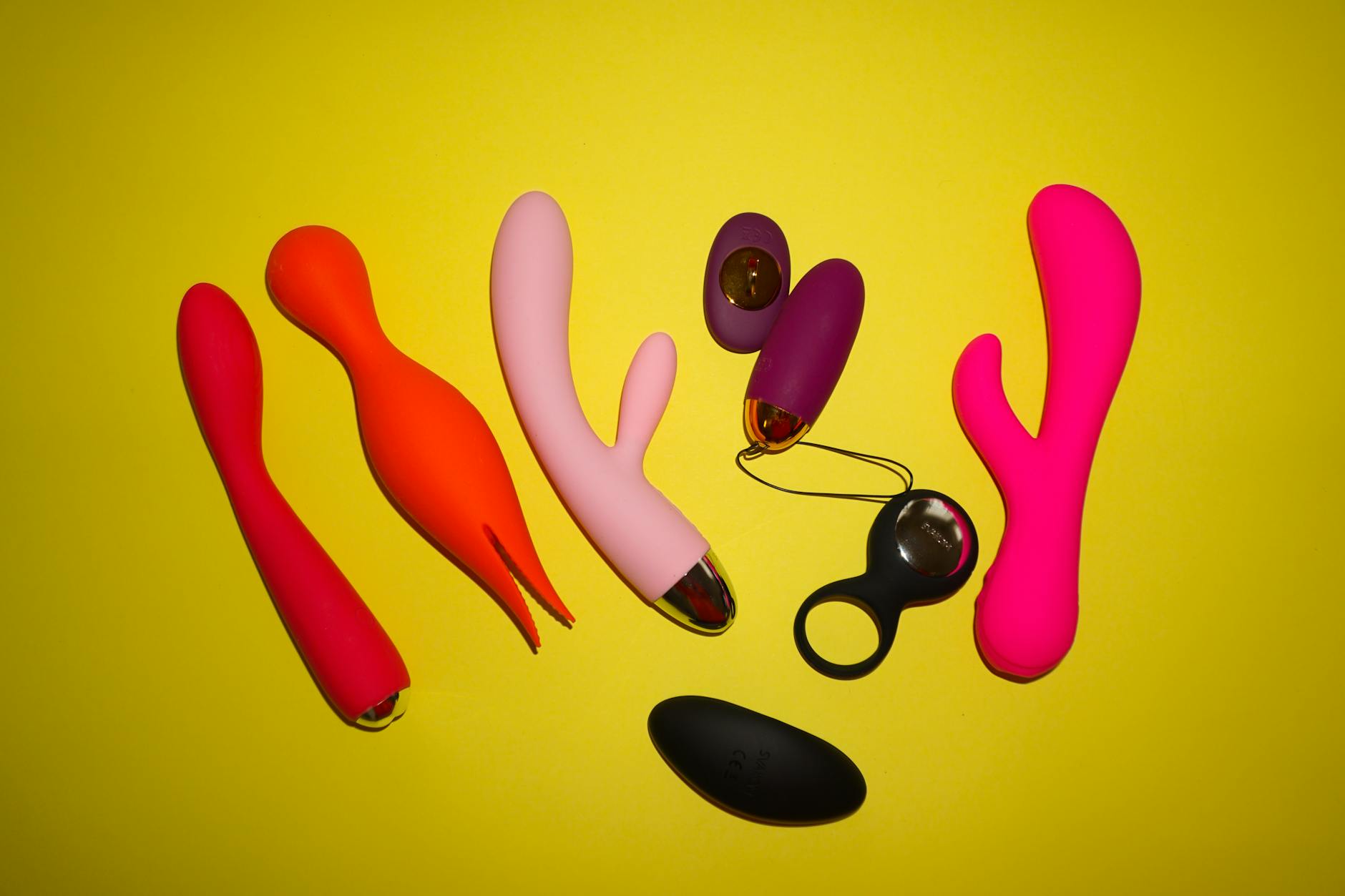
How to Use Lemon Vibrators When You Feel Disconnected From Your Body
Let's be real. Disconnection from your body isn't rare. It's what happens when stress, past experiences, relationship patterns, or even just too much screen time stack up and suddenly you're living from the neck up.
You know the feeling. Sex happens, but you're not really there. You're watching yourself from a distance or thinking about the grocery list. Your partner touches you and it barely registers. Maybe you feel numb entirely, or maybe sensation comes in bursts that don't feel connected to anything solid. This is called dissociation, and it's your nervous system's way of saying it needs help coming back online.
The good news: using lemon vibrators intentionally, with presence, is one of the most direct paths back to your body. Not because vibrators are magic, but because they demand attention in a way other stimulation sometimes doesn't.
Why disconnection happens in the first place
Disconnection isn't something you're doing wrong. It's often a protective response. If your nervous system has learned that being "in your body" means pain, overwhelm, or vulnerability, it goes dormant.
This shows up during sex as numbness, difficulty orgasming, or that dissociative feeling where you're observing yourself instead of inhabiting yourself. Some people describe it as watching from above. Others feel physically present but emotionally absent.
The tricky part is that many people assume this means their body is broken, when actually their nervous system is working exactly as designed. It's protecting you. The goal isn't to override that response, but to gradually teach your nervous system that your body is safe again.
That's where clitoral vibrators come in. They offer high-frequency sensory input that your brain cannot ignore. Unlike slower manual touch, which your nervous system might dismiss as background noise, the Lemon's suction pattern creates a clear signal that cuts through dissociation.
Starting with the body scan
Before you even touch the vibrator to your body, spend two minutes doing a simple scan. Start at the top of your head and slowly move your attention down: forehead, jaw, shoulders, arms, hands, chest, belly, hips, thighs, knees, calves, feet.
Don't try to change anything. You're not trying to feel relaxed or present. You're just noticing. Where do you feel locked? Where is sensation clear? Where does it disappear?
This might sound like overkill, but this step is the foundation. You're training your attention back into your body. Dissociation thrives when you're not looking. The moment you start looking, it starts to dissolve.
Do this every time before you use a lemon vibrator. It takes two minutes and it genuinely changes what happens next.
The pressure approach: starting low
Most people reach for high intensity right away. Don't. When you're reconnecting, intensity works against you. High vibration can feel chaotic if your nervous system is already fragmented.
Start with the Lemon's lowest pattern. Pattern 1 or 2. Hold it against your clitoris for five to ten seconds, then move it slightly. Notice what you feel. Not what you think you should feel. Not whether it's "working." Just: what's the actual sensation?
Take a breath. Move to another area nearby. Maybe the mons pubis or the inner thigh. Stay at low intensity. You're not racing to an orgasm. You're creating a map of sensation.
Many people find that after five to ten minutes of this intentional, low-pressure exploration, their nervous system settles. Suddenly sensation that felt numb becomes clear. That's the reconnection starting.
Anchoring attention with breath
Disconnection loves a wandering mind. The moment you start thinking about work or your appearance, you float right back out of your body.
Use breath as an anchor. As you hold the vibrator, match your breathing to the vibration pattern. Breathe in on four counts, out on four counts. Feel the vibration on the exhale. This ties your attention to three things at once: breath, sensation, and movement. Your brain can't dissociate when it's managing three inputs.
If your mind wanders, notice it without judgment. That's the whole practice. Notice, come back. Notice, come back. It's not about never drifting. It's about recognizing when you have and choosing to return.
When to introduce a partner
If you're reconnecting with a partner present, communicate the goal first. You're not trying to reach orgasm. You're rebuilding sensation. That takes pressure off both of you.
Have your partner watch, without touching, as you explore. Their presence and attention can actually ground you. Then, if it feels right, have them guide the vibrator slowly while you focus on breath. Their hand steady, the vibrator moving with intention, creates a different kind of anchor than solo use.
The key: slow. Most couples rush. Slow is where reconnection happens. When you want deeper connection with a long-term partner, intentional pacing transforms the whole experience.
Building duration gradually
Start with five minutes. That's not arbitrary. Five minutes is long enough to notice a shift without overwhelming a dysregulated nervous system.
Over two to three weeks, add two minutes each session if it feels good. By week four, you're at ten to fifteen minutes. This gradual expansion trains your system to stay present for longer. You're teaching your nervous system that your body is safe to inhabit.
Don't expect orgasm right away. Some people reconnect fully and still take a few more sessions before climax feels integrated. That's completely normal. The goal isn't the finish line. The goal is presence.
The role of lemon sexual toys in nervous system regulation
Here's what makes lemon clitoral vibrators particularly useful for reconnection: the suction pattern creates bilateral stimulation. Both the intensity and the pattern signal "pay attention" to your nervous system in a way that's hard to ignore.
Suction is also gentler than traditional vibration for many people who carry tension in their pelvic floor. If you're dissociated, there's often muscle guarding you're not even aware of. Suction helps that release more naturally than direct vibration.
The tactile feedback from a clitoral vibrator also recruits more of your brain's sensory cortex than slower touch does. More brain areas engaged means more resources to pull you out of dissociation.
What if sensation still doesn't return
If after four to six weeks of intentional practice with lemon adult toys you're still completely numb, that's worth exploring with a trauma-informed therapist or somatic practitioner. Severe dissociation sometimes needs professional support alongside self-practice.
That's not a failure on your part. That's good information. It tells you that your nervous system needs a different kind of input or that there's something else going on that deserves qualified attention.
But most people find that even within a few sessions of intentional, low-pressure, breath-focused practice with a lemon vibrator, sensation starts to return. Not always intense sensation. Sometimes just the first flicker of actual feeling.
The patience part
Reconnection isn't fast. Your nervous system learned to go numb for a reason, and it won't trust that reason is gone just because you want it to. It needs repetition. It needs consistency. It needs proof.
Use your lemon vibrator two to three times a week. Not every day. Recovery needs rest. But not so rarely that your nervous system forgets. Two to three times a week, fifteen to thirty minutes, with full attention. That's the rhythm that works.
Within a month, most people notice a real shift. Sensation that felt numb becomes clear. Presence that felt impossible becomes possible. And sex, which felt like something happening to you, starts to feel like something you're actually inside of.
People also ask
Can dissociation during sex be a sign of something serious?
Dissociation during sex can be rooted in anxiety, past trauma, stress, or nervous system dysregulation. It's worth paying attention to. If it's only happening during sex and nowhere else in your life, that's one pattern. If you're dissociating frequently throughout your day, that's worth talking to a therapist about. Either way, using lemon vibrators with intentional presence can help. But if disconnection is severe or worsening, professional support alongside your own practice makes sense.
How do lemon vibrators specifically help with reconnection compared to other toys?
Lemon clitoral vibrators use suction, which creates a unique bilateral pattern that signals "pay attention" to your nervous system in a way sustained vibration sometimes doesn't. They also tend to be less intense, which is crucial when reconnecting. You want sensation you can actually feel and integrate, not sensation that overwhelms. The suction pattern also helps release pelvic floor tension, which usually accompanies dissociation.
What if I can't relax enough to use a vibrator at all?
Start even slower. Just hold the vibrator against your skin without turning it on. Let your nervous system get used to its presence. Then turn it on for one second, off for five seconds. Gradually shorten the off periods. This tiny-step approach works when standard gradual approaches feel too big. Your nervous system learns safety through small, repeated positive experiences.
Should I use lemon vibrators alone or with a partner when reconnecting?
Both work, but they work differently. Alone, you can move at your own pace without worrying about someone else's experience. With a partner, their calm presence and attention can help ground you. If your dissociation is tied to feeling unseen or unsafe with your partner, solo practice comes first. If it's more general disconnection, partner practice can be very powerful. Many people benefit from doing both.
How long does it actually take to feel reconnected again?
Most people notice a shift within three to four sessions. Within two to three weeks of consistent practice, the difference becomes obvious. But full reconnection, where presence feels natural rather than effortful, often takes a couple of months. That's normal. You're rewiring patterns that took much longer to develop. Patience is the practice.
What if I reach orgasm but still feel dissociated?
Orgasm without presence is a real thing, and it's not actually satisfying in any meaningful way. If this happens, slow down even more. You might be moving toward climax before your nervous system has finished the reconnection work. Pull back the intensity, extend the duration, prioritize presence over sensation. Orgasm will come. It's not the goal right now. Presence is.
The point
Disconnection from your body isn't something you have to live with. It's not a character flaw or a sign your pleasure is broken. It's information. Your nervous system is protecting you because at some point, being present felt unsafe.
Using lemon vibrators when clitoral arousal takes longer to build and when sensation feels distant is about more than sensation. It's about gradually teaching your body that it's safe to feel again. That it's safe to be here. That presence is possible.
Start small. Stay consistent. Trust the process. Your body has been waiting for you to come back.